
Central Asian Capital & Markets
Tracking the region shaping Eurasian supply chains, energy flows, and frontier technologies
Where capital is flowing in Central Asia, where risk is shifting, and where regional opportunities are taking shape. Original analysis plus open data platforms on resources, trade, energy, and technology.
The global economy is being rewired and Central Asia is at the center of this. Positioned between China, Russia, Europe, South Asia, and the Middle East, the region is becoming a critical hub for energy, minerals, and transit corridors. Central Asian Capital & Markets delivers actionable insights and cutting-edge data platforms into where capital is flowing, where risk is shifting, and where regional opportunities are taking shape.
Research Focus Areas
- Digital Economy & Fintech — How cryptocurrencies, e-commerce, and currency diversification are shaping Central Asia's future.
- Artificial Intelligence & Data Infrastructure — How Central Asia can capitalize on frontier technologies.
- Trade & Transit Corridors — Middle Corridor, logistical networks, and the geopolitics of connectivity.
- Energy Transition and Green Power — Hydrogen, renewables, and the race to decarbonize legacy energy systems.
- Critical Minerals & Resources — Moving up the supply chain from extraction to processing.
- Labor, Skills & Human Capital — Demographics, education, and workforce transformation.
- Regulation and Business Climate — Subsoil laws, investment regimes, and barriers to entry.
Data Platforms
In addition to original economic insights and analysis, we also offer a range of data platforms which we welcome scholars to share and collaborate with us on.
Central Asia Resource Tracker
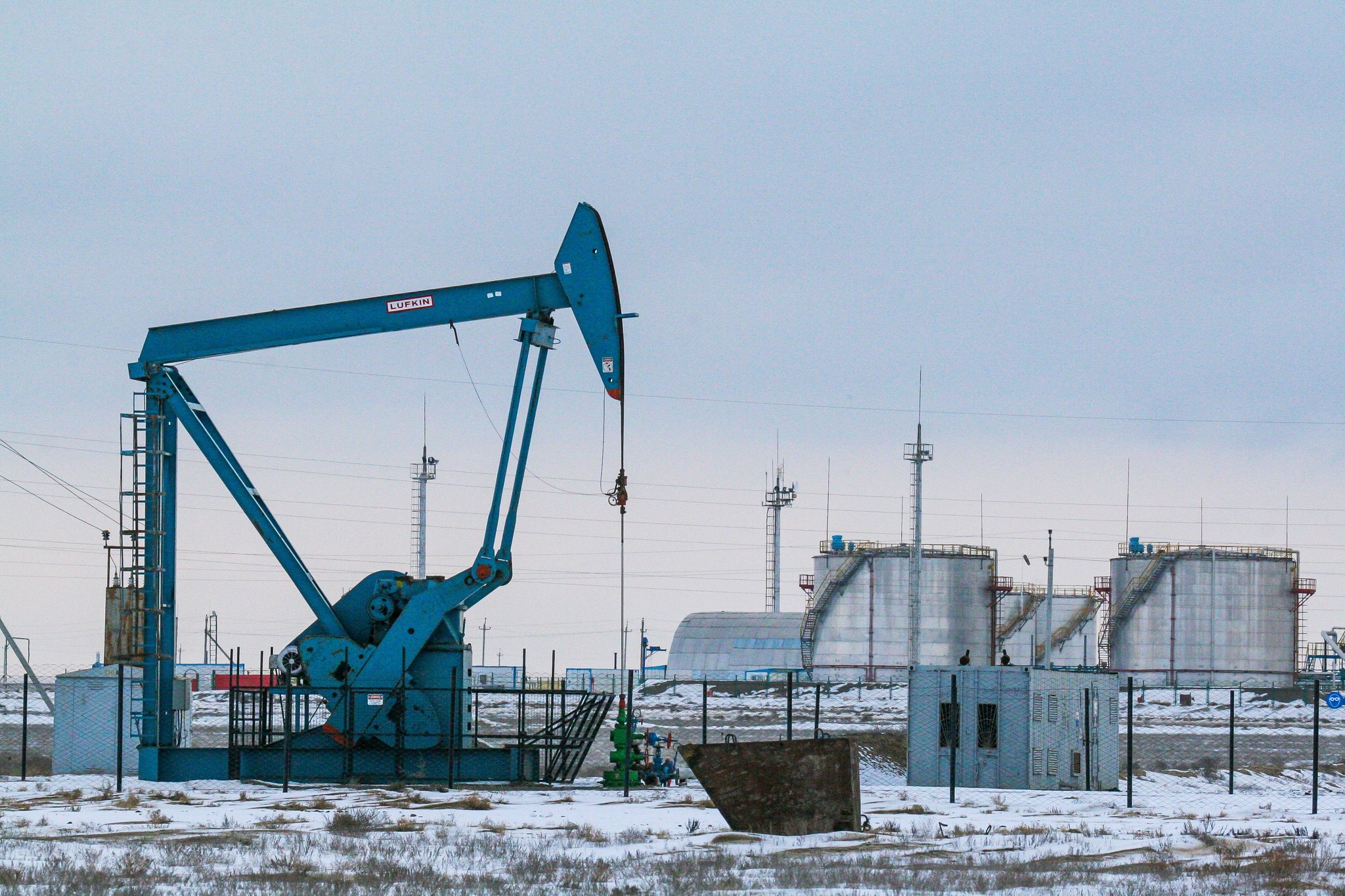
The Central Asia Resource Tracker maps the existing reserves, production, processing, and export of natural resources, including over 100 different minerals, hydrocarbons, chemicals, industrial materials, and agricultural products.
Download the data here.
For feedback, suggestions, or to report inconsistencies, contact info@oxussociety.org.
Key Takeaways
- The Central Asia Resource Tracker covers over $118 billion of resource exports from Central Asia. By far the largest export is Kazakh oil, which accounts for 40% of exports in the database, followed by Turkmen gas (9.2%), Uzbek gold (8.3%), Kazakh gold (7.7%), and Kyrgyz gold (5.3%).
- The EU is the largest importer of Central Asian resources covered by the tracker, accounting for 29.1% of the total. China is the largest country importer, taking one quarter of Central Asian resources, followed by the UK and Switzerland at 10% — most of which is precious metals.
- The largest mineral reserves are chromium (30% of global reserves), manganese (27.2%), and tungsten (20.7%), all in Kazakhstan. The most significant critical mineral extracted in Central Asia is uranium from Kazakhstan (42% of world production). Other notable minerals include beryllium from Kazakhstan (25% of global production) and antimony from Tajikistan (20% of world production).
- We mapped the export of 33 critical minerals from Central Asia amounting to $15.7 billion per year. Of these, $14 billion come from Kazakhstan. The most significant are copper ($7.3 billion) and uranium ($4.2 billion) from Kazakhstan. China accounts for just under half of the critical minerals exports from Central Asia, Russia accounts for one quarter, EU countries 6.4%, and the United States 2.1%.
- Hydrocarbons make up just over half of the resource exports from Central Asia in the tracker ($61 billion). China is the largest importer of Central Asian hydrocarbons, accounting for 27.8% of the total. Taken as a whole, the European Union accounts for just under half of Central Asia's hydrocarbon exports, with Italy accounting for almost half of that figure. Russia accounts for just 1.2% of Central Asian exports, but it wields significant leverage as over 80% of Kazakhstan's oil transits through Russian pipelines.
- Agricultural exports, including timber, grain, fruits, and vegetables, amount to $8.1 billion. Just under one third of these are exported within Central Asia. Russia is the largest country importer, accounting for 16%, followed closely by China at 15.7%.