People
The Oxus Society brings together scholars, journalists, and practitioners from around the world.
Staff
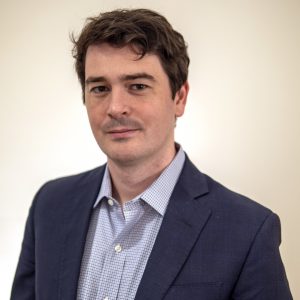
Edward Lemon
President
edwardlemon@oxussociety.orgPresident of the Oxus Society for Central Asian Affairs and Research Assistant Professor at The Bush School of Government and Public Service, Texas A&M University, Washington D.C. Teaching Site. He is a Global Fellow at the Wilson Center and previously served as a Mellon Postdoctoral Fellow at Columbia University's Political Science Department. He received his doctorate in Politics and International Relations from the University of Exeter in 2016. His research focuses on authoritarianism and security in Central Asia, with over three years of fieldwork across Tajikistan, Kazakhstan, Kyrgyzstan, and Russia. He edited Critical Approaches to Security in Central Asia (Routledge, 2018) and has published in Democratization, Central Asian Affairs, Caucasus Survey, Journal of Democracy, and The RUSI Journal.
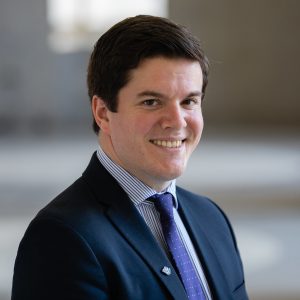
Bradley Jardine
Managing Director
bradleyjardine@oxussociety.orgManages the Oxus Society's research portfolio and is a Fellow at the Wilson Center's Kissinger Institute on China and the United States. His journalism background includes roles as Moscow Times editor and Caucasus correspondent for Eurasianet, covering Armenia's Velvet Revolution. He holds dual master's degrees in Russian and Eurasian Studies and Baltic Sea Region Studies from the University of Glasgow, plus an MMS in Global Affairs from Tsinghua University. His research examines surveillance technology proliferation in Central Asia and China's expanding security role in former Soviet territories. He authored the Kennan Institute monograph Great Wall of Steel: China's Strategy to Secure Central and South Asia. His byline appears in the Washington Post, Guardian, Wall Street Journal, Foreign Policy, BBC, CNN, New York Times, Atlantic, and TIME.

Michael Hilliard
Director of Defence & Security Analysis
michaelhilliard@oxussociety.orgDirector of Defense & Security Analysis at the Oxus Society for Central Asian Affairs, where he leads the multi-volume "Armed Forces of Central Asia" project. He also works as a strategic consultant, advising energy and mining firms across Eurasia on military security, regional risk, and economic issues. Drawing on his experiences as a policy adviser and defense analyst, a former conflict journalist, and the host of the geopolitical podcast "The Red Line," Michael brings clear, evidence-based insights to complex security questions.

Albina Tortbayeva
Program Manager
Possesses over a decade of experience managing and evaluating donor-funded initiatives in education, youth, human rights, and migration throughout Central Asia. In 2023, she established ARLAB, a women-led nonprofit promoting local research capacity, youth programming, and international scholarly connections from Kazakhstan.
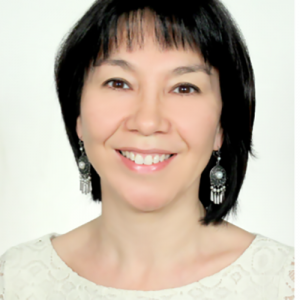
Dina Sharipova
Trainer & Mentor
Assistant Professor at Nazarbayev University's Graduate School of Public Policy, formerly at KIMEP University. Her research addresses state formation, formal and informal institutions, identity politics, and social capital in Central Asia. She authored State-Building in Kazakhstan: Continuity and Transformation of Informal Institutions (Lexington Books, 2018). Publications appear in Nationalism and Ethnic Politics, Central Asia Survey, Central Asian Affairs, and Nationalities Papers. She earned her Political Science doctorate from Indiana University.
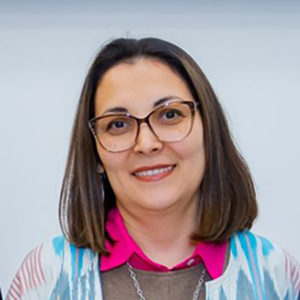
Madina Junussova
Trainer & Mentor
Senior Fellow at the University of Central Asia's Institute for Public Policy and Administration and Lecturer at CERGE-EI Foundation (Czech Republic). She brings over 15 years of experience in urban and regional planning and public policy research. She authored Cities and Local Governments in Central Asia: Administrative, Fiscal, and Political Urban Battles (Routledge, 2020). Her PhD in Public Policy came from Carleton University.
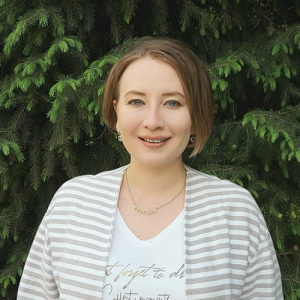
Khalida Azhigulova
Trainer & Mentor
Associate Professor of Law and Director of the Center for Research on Human Rights, Inclusion and Civil Society at Eurasian Technological University. She serves as national coordinator for "Street Law Kazakhstan," an educational violence prevention initiative, and advises Kazakhstan's Ministry of Foreign Affairs and Security Council Interdepartmental Commission on economic security. She has authored and coordinated over 40 scientific articles and advocacy campaigns. Her PhD is from the University of Leicester.
Board of Directors

Nicolle Galteland
Freelance Journalist & Audio Producer
Freelance journalist and audio producer whose work focuses on issues of public health including the opioid crisis, health system disparities, water and sanitation, and Covid-19. Before working as a journalist, she spent several years in the nonprofit world working for Safe Water Network. She spent a year conducting research in Tajikistan. She holds degrees in journalism and international relations from New York University and the University of Washington.
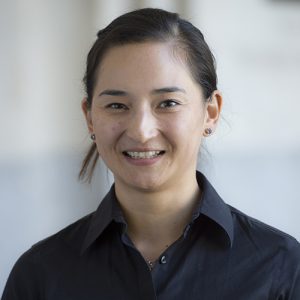
Dr. Erica Marat
Associate Professor, National Defense University
Associate Professor and Chair of the Regional and Analytical Studies Department at the College of International Security Affairs, National Defense University in Washington, DC. Her research focuses on violence and mobilization, security institutions, and mobilization in Eurasia, India, and Mexico. She has authored several books, including most recently The Politics of Police Reform: Society against the State in Post-Soviet Countries (Oxford University Press, 2018).
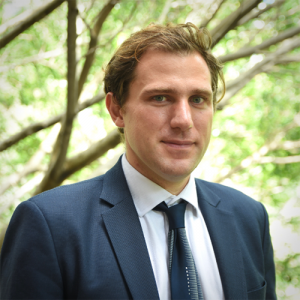
Dr. Dirk van der Kley
Research Fellow, Australian National University
Research Fellow concurrently at the Australian National University's School of Regulation and Global Governance and the National Security College. He is a member of the ANU Working Group on Geoeconomics. He was previously Program Director for Policy Research at China Matters. His research focuses on China's economic relations with Asia, in particular Central Asia. He holds a PhD from the Centre for Arabic and Islamic Studies at the ANU and has worked at the Lowy Institute for International Affairs and in China as a translator and in business development.
Advisory Council
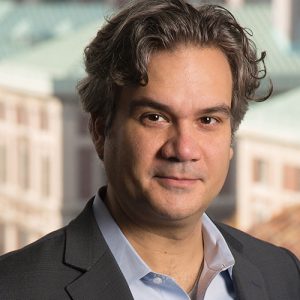
Alexander Cooley
Columbia University / Barnard College
Claire Tow Professor of Political Science at Barnard College and Director of Columbia University's Harriman Institute for the study of Russia, Eurasia, and Eastern Europe. His research examines how external actors—including emerging powers, international organizations, multinational companies, NGOs, and Western enablers of grand corruption—have influenced the development, governance, and sovereignty of the former Soviet states, with a focus on Central Asia and the Caucasus. He is the author and/or editor of seven academic books including Great Games, Local Rules: The New Great Power Contest in Central Asia (Oxford University Press, 2012), Dictators without Borders: Power and Money in Central Asia (Yale University Press, 2017), co-authored with John Heathershaw, and Exit from Hegemony: The Unravelling of the American Global Order (Oxford University Press, 2020), co-authored with Daniel Nexon. He earned both his MA and PhD from Columbia University.
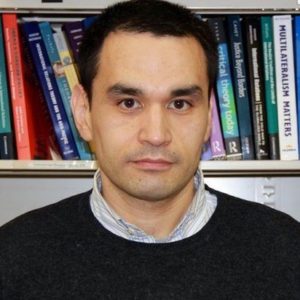
Timur Dadabaev
University of Tsukuba, Japan
Professor of International Relations and Director of the Special Program for Japanese and Eurasian Studies at the Graduate School of Social Sciences and Humanities, University of Tsukuba, Japan. He has published in Communist and Post-Communist Studies, The Pacific Review, Nationalities Papers, Journal of Contemporary China, Asian Survey, Inner Asia, Central Asian Survey, Asian Affairs, and others. His books include Identity and Memory in Post-Soviet Central Asia (Routledge, 2015), Japan in Central Asia (Palgrave Macmillan, 2016), and Transcontinental Silk Road Strategies: Comparing China, Japan and Korea in Uzbekistan (Routledge, 2019).
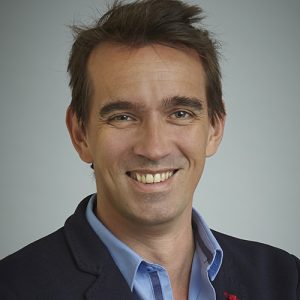
Peter Frankopan
Oxford University
Professor of Global History at Oxford University, where he is Stavros Niarchos Director of the Oxford Centre for Byzantine Research and Senior Research Fellow at Worcester College. He is also Associate Director of the Silk Roads Programme at King's College, Cambridge. He works on the history of exchange in the Eastern Mediterranean, Central Asia, Russia, the Middle East, South Asia, and China. His books include the New York Times bestseller The Silk Roads: A New History of the World (Bloomsbury, 2015), one of the Sunday Times Books of the Decade 2010–20, and The New Silk Roads: The Present and Future of the World (Bloomsbury, 2018). He works with the World Bank, Asian Development Bank, UNIDO, UNESCO, the EU, and with governments and corporations around the world.
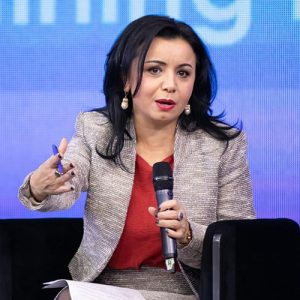
Navbahor Imamova
Voice of America
Prominent Uzbek journalist at the Voice of America who has covered Central Asia and the U.S. for nearly 20 years on TV, radio, and online. Since 2018, she has been reporting from inside Uzbekistan as the first-ever U.S.-based accredited correspondent in the country. She frequently speaks on regional issues in Central Asia, as well as Uzbek politics and society, for policy, academic, and popular audiences. Her analytical pieces have been published in The Atlantic, Foreign Policy, and The National Interest. She is also the founding President of the VOA Women's Caucus. During 2016–2017, she was an Edward S. Mason Fellow in public policy and management while earning her Mid-Career Masters in Public Administration at Harvard University's Kennedy School. She holds a BA in journalism from the University of Mysore, India, and an MA in journalism from Ball State University.
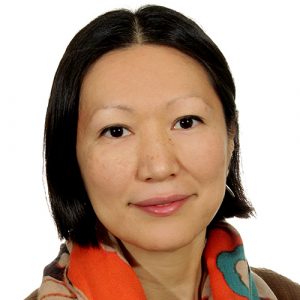
Nargis Kassenova
Harvard / KIMEP University
Senior Fellow at the Davis Center for Russian and Eurasian Studies at Harvard University, leading its Program on Central Asia. She is also Associate Professor at the Department of International Relations and Regional Studies at KIMEP University in Almaty, Kazakhstan, where she created the Central Asian Studies Center and the China and Central Asia Studies Center. She holds a PhD in International Cooperation Studies from the Graduate School of International Development, Nagoya University, Japan. Her research includes Central Asian politics and security, Eurasian geopolitics, China's Belt and Road Initiative and governance in Central Asia, and the history of state-making in Central Asia.
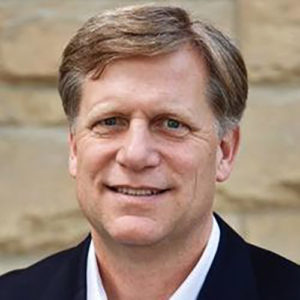
Michael McFaul
Stanford University
Ken Olivier and Angela Nomellini Professor of International Studies in Political Science, Director and Senior Fellow at the Freeman Spogli Institute for International Studies, and Peter and Helen Bing Senior Fellow at the Hoover Institution, all at Stanford University. He is also an analyst for NBC News and a contributing columnist to The Washington Post. He served for five years in the Obama administration, first as Special Assistant to the President and Senior Director for Russian and Eurasian Affairs at the National Security Council (2009–2012), and then as U.S. Ambassador to the Russian Federation (2012–2014).
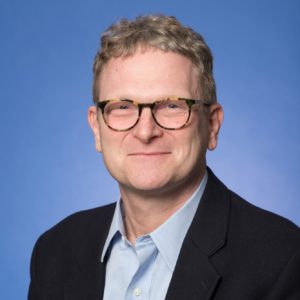
Sean R. Roberts
George Washington University
Associate Professor of the Practice of International Affairs and Director of the International Development Studies program at The George Washington University's Elliott School of International Affairs. An anthropologist by training, he has spent over eight years living in Central Asia conducting research and applied work in international development, particularly related to democracy, governance, and human rights. He has published numerous articles in academic journals, edited volumes, and policy-oriented publications about political development in Central Asia and the Uyghur people, whom he has studied for over thirty years. His book The War on the Uyghurs: China's Internal Campaign Against a Muslim Minority was published in 2020 by Princeton University Press.
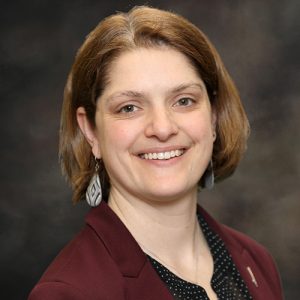
Emma Sabzalieva
UNESCO / York University
Policy Analyst at the UNESCO International Institute for Higher Education and a Research Associate at York University in Toronto. Her research focuses on the politics of knowledge, international academic relations, and higher education policy. Her doctoral research at the University of Toronto, funded by a Vanier Canada Graduate Scholarship and a Leverhulme Trust Study Abroad Studentship, investigated how higher education changes in response to major social and political transformation, comparing responses to the fall of the Soviet Union across three Central Asian countries. She is co-author of Managing Your Career in Higher Education Administration (Palgrave Macmillan, 2014).
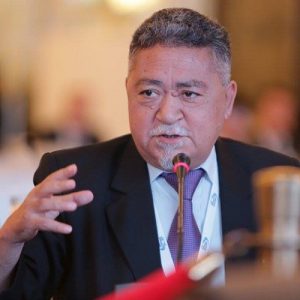
Phunchok Stobdan
Ladakh International Centre
Well-known Indian scholar on strategic affairs who served as diplomat in Central Asia for several years and was India's Ambassador to the Republic of Kyrgyzstan between 2010 and 2012. He has written several books and strategic commentaries on the Eurasian region. His latest books include The Great Game in the Buddhist Himalayas: India and China's Quest for Strategic Dominance (Penguin Random House India, 2019) and India and Central Asia: The Strategic Dimension (2020). He is currently President of the Ladakh International Centre, Leh.
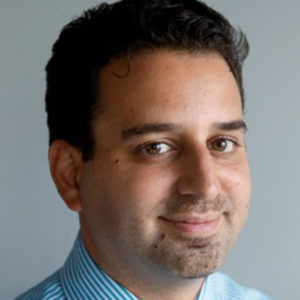
Steve Swerdlow
University of Southern California
Human rights lawyer and Associate Professor of the Practice of Human Rights in the Department of Political Science and International Relations at the University of Southern California. Between 2010 and 2019, he was Senior Central Asia researcher at Human Rights Watch, heading the organization's work on Uzbekistan and Tajikistan and founding its office in Kyrgyzstan. He has worked as a consultant with the United Nations Development Programme and the U.S. International Commission on Religious Freedom on Central Asia. He received his JD from the University of California, Berkeley School of Law and MA in International Affairs from Columbia University's School of International and Public Affairs with a certificate in Post-Soviet Studies from the Harriman Institute.